July 23, 2026
What time to set your ceremony (the decision that changes the photographs most)
In Paraguay the sun sets up to an hour and a half apart depending on the month. What happens at 3, at 5 and at 8 pm, and the 30 minutes we always ask for.
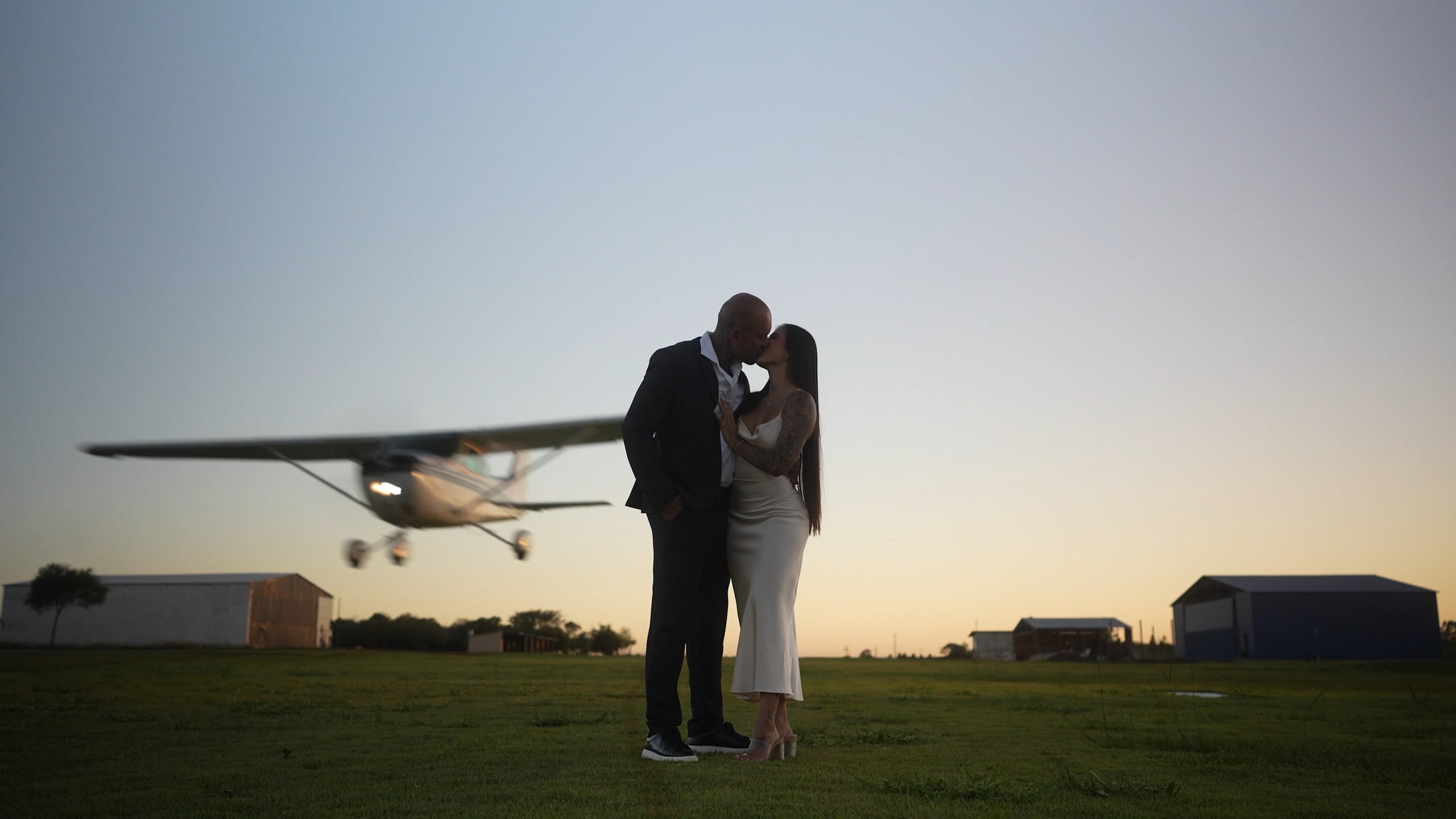
Of every decision you make about your wedding, the time of the ceremony is the one that changes how the photographs look the most. And it's almost always decided without that in mind.
This isn't about arranging your wedding around the photographer. It's about knowing what you'll get for the hour you choose.
The short version
The best light of the day is the last 60 to 90 minutes before the sun goes down. It's low, golden, soft light that comes in from the side and draws people rather than flattening them.
If you want photographs in that light, the ceremony has to end as that hour begins.
The three possible hours
Ceremony at 3 or 4 pm. The sun is high and hard. It carves shadows under the eyes, people squint, and the white of the dress blows out. It can be worked with — finding shade, shooting into the light — but it's the hardest hour of the day. If the ceremony is religious and indoors, none of that matters: the problem shows up afterwards, on the way out.
Ceremony at 5 or 6 pm. This is the sweet spot. The ceremony happens in good light, and by the time the greetings and family photographs are done, golden hour is right there waiting. This is the one we recommend.
Ceremony at 8 pm or later. It's already dark. Everything visible depends on the light the venue has installed, plus ours. Beautiful photographs are still possible — night flash has a language of its own — but you lose the landscape, the sunset and the green. If you chose a venue for its view, you'll arrive when it can no longer be seen.
There's no bad hour. There are hours that give you a different album. What we don't want is for you to find that out when you receive it.
The sun sets at a different hour all year round
This is the part that surprises people most. In Paraguay, the difference between summer and winter is nearly an hour and a half:
- December and January: dark around 7:30 or 7:45 pm.
- March and September: around 6:15 pm.
- June and July: around 5:30 pm.
A 6 pm ceremony in January has light to spare. The same 6 pm ceremony in June happens entirely after dark. Same hour on the clock, two visually different weddings.
So when you tell us the date, the first thing we check is what time the sun sets on that exact day. It isn't something you need to look up: we'll tell you.
Half an hour that's worth the whole session
There's one moment we always ask for, and it's the only request we make about the schedule: 30 minutes with just the two of you, near sunset.
It isn't a posing session. It's taking you out of the noise, walking a little, and letting you breathe after hours of greeting people. Almost always, that's where the photographs you end up hanging on a wall come from.
If the ceremony ends very late, those 30 minutes don't exist. It's the one thing editing can't recover.
How we work it out together
- You tell us the date and the venue.
- We check what time it gets dark there on that exact day.
- We propose a ceremony time and a schedule with those 30 minutes built in.
- You decide. If the church, the venue or the family means it can't move, we know in advance and work differently: we bring light and build something else.
The point is to have the conversation before the invitations go out, not after.