July 23, 2026
Photography, film, or both
What each one does, which to choose if the budget only stretches to one, and why together they give you more than hiring separately.
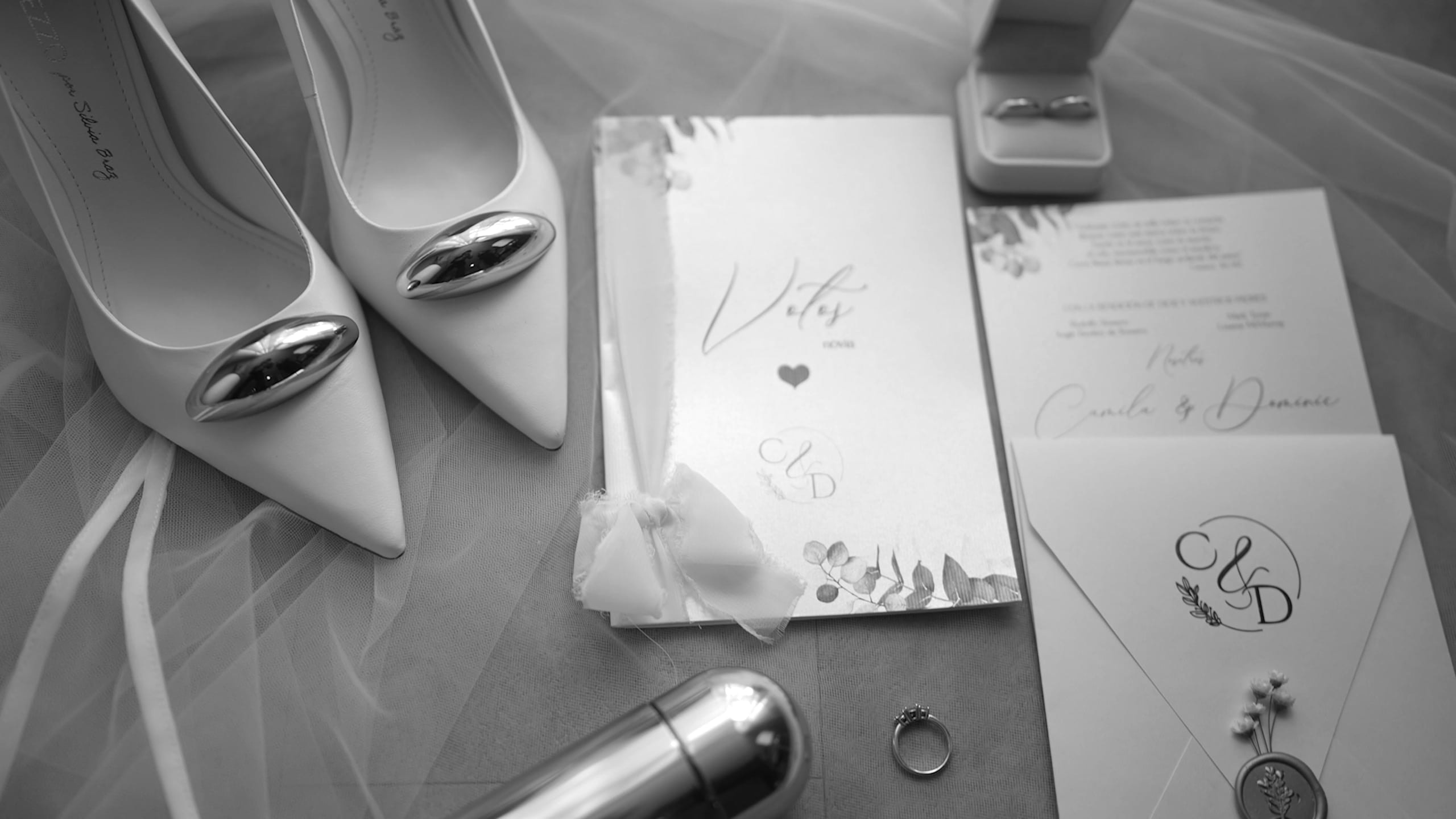
It's the question we're asked most, and the one that shapes the budget most. Here's the honest answer, with nothing to sell: they're two different things and they do two different jobs.
What a photograph does
A photograph stops one instant and holds it still forever. It goes on a wall, gets sent over WhatsApp, gets printed in an album that someone will open thirty years from now with no cable, no app and no password.
It's the format that survives. It reads in three seconds and asks nothing of you.
What a film does
A film gives back movement and, above all, voice and sound. Your father's laugh, what your grandmother said in the toast, how your voice shook during the vows. None of that fits in a photograph.
It's the format that gives you the day back. It asks for seven minutes and your attention, but when you put it on, you're there again.
The photographs are what you'll see every day. The film is what you'll watch on anniversaries, crying.
If you have to choose one
Our honest answer, and it argues against our own interest in selling more: if the budget only stretches to one, choose photography.
Not because it's worth more, but for a practical reason: photographs get used. They're in the house, on your phone, in the frame on the bedside table. A film nobody opens is a large file in a folder.
That said, there are two cases where we'd say the opposite:
- If there's an older relative whose voice matters to you. That can't be recovered later.
- If the wedding is abroad and half the family can't travel. The film is what genuinely shows it to them.
Why both together give you more
It isn't just two services added up. When the same people handle photography and film, three things happen:
- There aren't two crews fighting over the same spot. This is the most common problem with hiring separately: the video walks into the photograph, the photograph walks into the video, and neither ends up as it should.
- You coordinate once. One schedule, one conversation, one view on what time things should happen.
- The look matches. The colour of the film and the colour of the photographs come from the same world, not two different readings of the same dress.
And in practice it costs noticeably less than hiring two separate suppliers.
What it looks like on a real job
For Nara and Diogo we did both, and it's the best example we have: the photographs from Fernando de Noronha, the film, and the pre-wedding we shot in their hangar with their own plane.
Look at the photographs, then watch the film. You'll understand in two minutes what this piece takes a page to explain.
If you want film only, Cami and Dominic and Lorena and Bruno are exactly that. And if you want photography only, Guadalupe and Igor.
What we never do
We don't send a photographer to shoot video on the side with the same camera. If you book film, someone's only job that day is the film, with their own gear and their own sound.
That's the difference between having video and having a film.